Core
Library Management
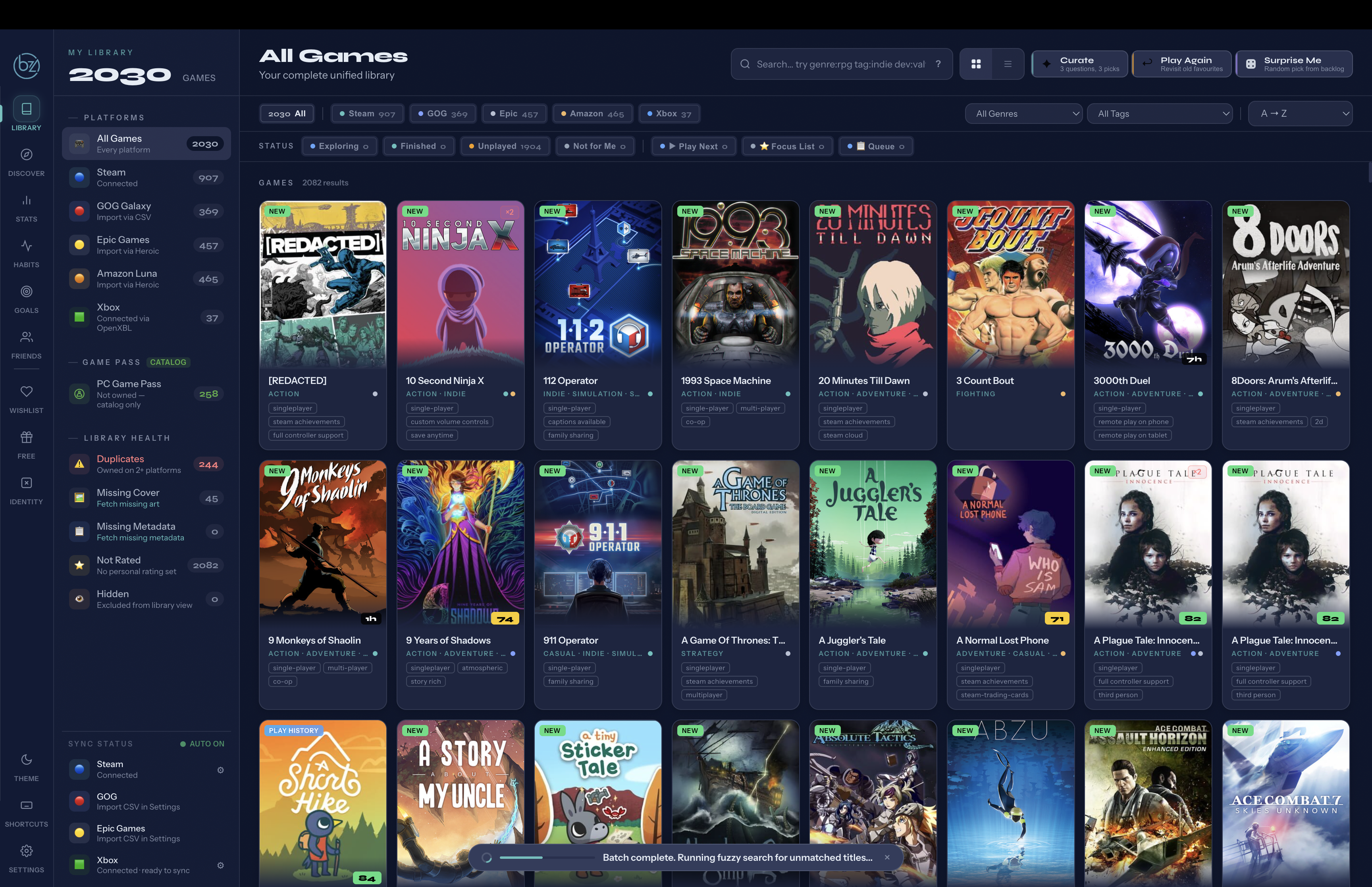
Most game libraries are spread across multiple launchers and consoles, and a spreadsheet someone made years ago and forgot about. Backlog Zero pulls it into one place. Steam and Xbox sync automatically. GOG and Epic get added manually in a few clicks. Every game gets a status — playing, completed, backlogged, abandoned — and cover art, metadata, and tags to go with it.
The part most people don't expect: duplicate detection. If you own the same game on Steam and GOG and Xbox, Backlog Zero will show you that. It's usually more surprising than it should be.
New in v1.3.0
Library Trust
Backlog Zero got better at knowing what belongs in your owned-game count, what is an add-on, and what needs a cleanup pass after a sync. GOG Galaxy imports, Heroic fallback records, archived entries, Galaxy-verified entries, DLC, and add-ons now get reconciled with more care.
Add-ons stay visible without pretending they are full games. Link them to a base game manually or in bulk, unlink mistakes, and use Library Recalibration in Settings to re-apply the new counting, duplicate, and add-on rules to older libraries.
v1.2.0 milestone
Library Health
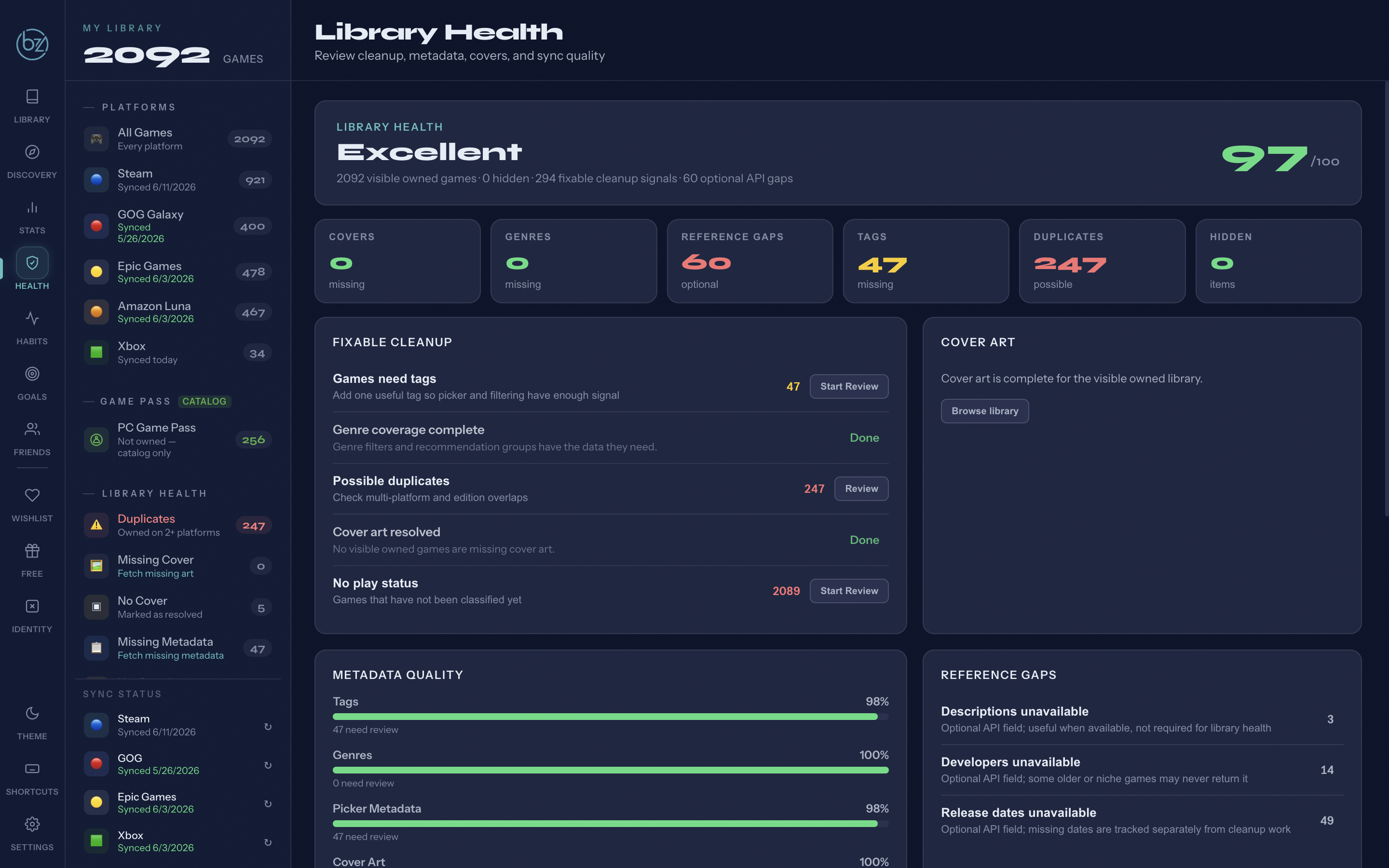
The Library Health dashboard turns collection cleanup into something you can actually work through. It separates sync quality, duplicates, missing-data triage, no-cover resolutions, hidden games, and optional reference gaps instead of burying everything in one vague warning count.
Review tags, genres, cover art, and play status in focused flows. Mark titles as No Cover when they should stop being retried. Check descriptions, developers, and release dates as field-specific reference gaps. The library gets cleaner without pretending every missing external field is an emergency.
Overview
Statistics
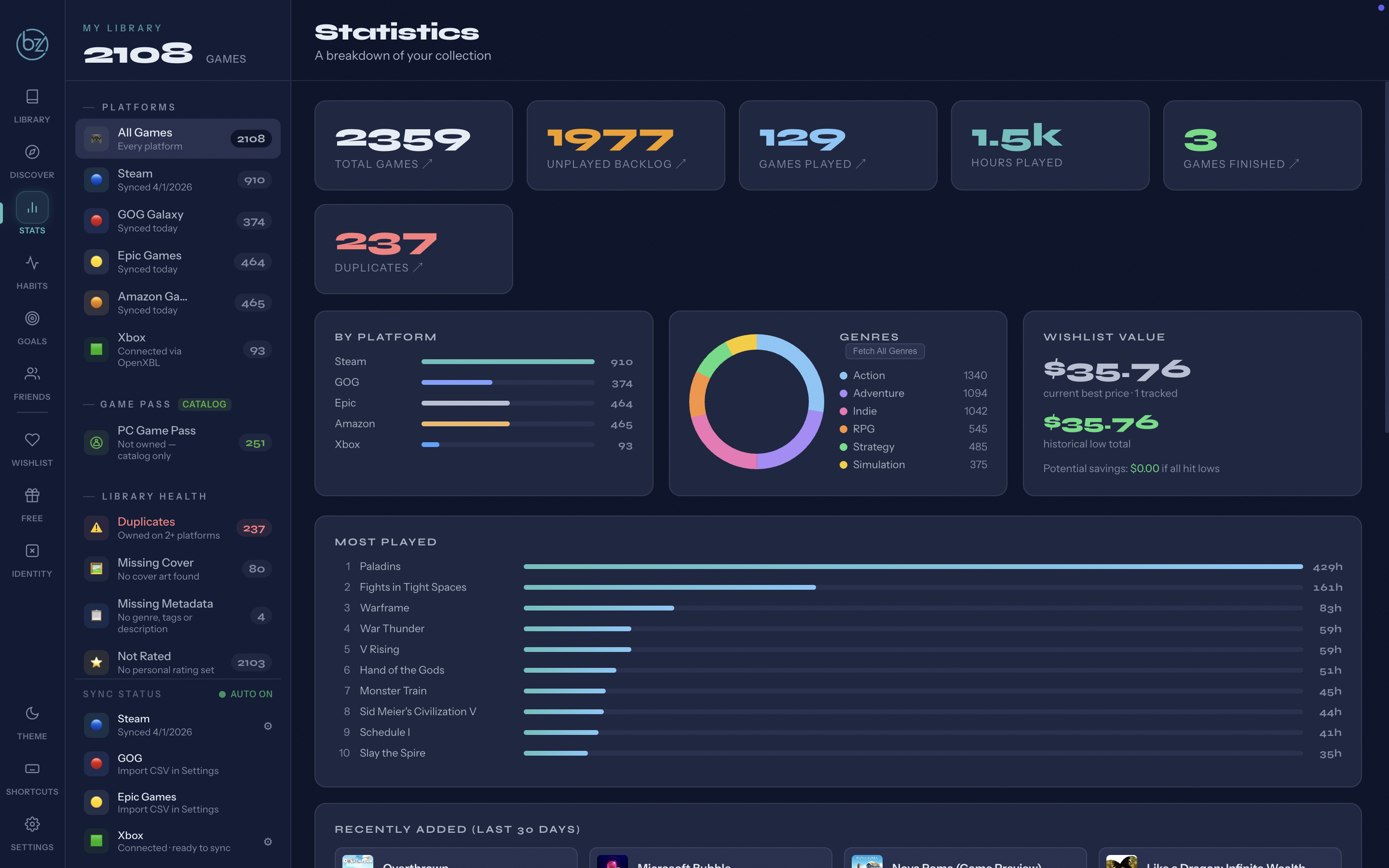
An honest look at your library by the numbers. Total games, unplayed backlog, hours played, games finished, duplicates — all in one place, updated as your library grows. The duplicate count alone tends to be a moment of reckoning for most people.
Dig deeper with a platform-by-platform breakdown, genre distribution, most played leaderboard, recently added games, and wishlist value tracking. Library Health now handles cleanup in its own dedicated space, so Statistics can stay focused on what your collection looks like instead of nagging you about maintenance.
Tracking
Session Logging
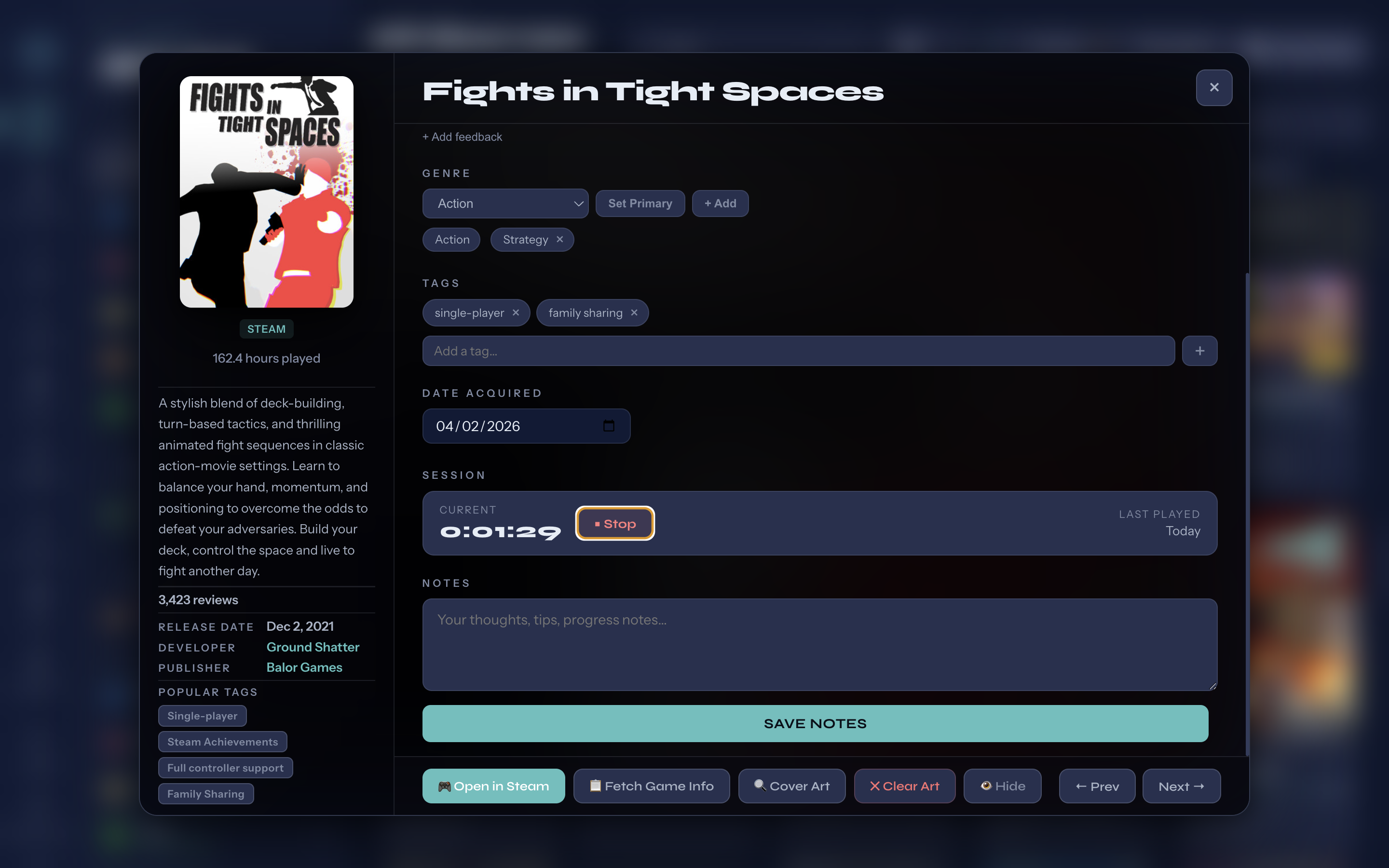
Steam sessions are tracked automatically. Every other platform can be logged manually from within the app — it takes about thirty seconds and builds a record of your actual gaming life across everything you play, not just what one platform decides to count.
That data feeds directly into your Habits dashboard and Identity Dossier. The more sessions you log, the more accurate the picture becomes. Pair it with Goals and it becomes a tool for actually making progress on your backlog instead of just watching it grow.
Personality
Identity Dossier
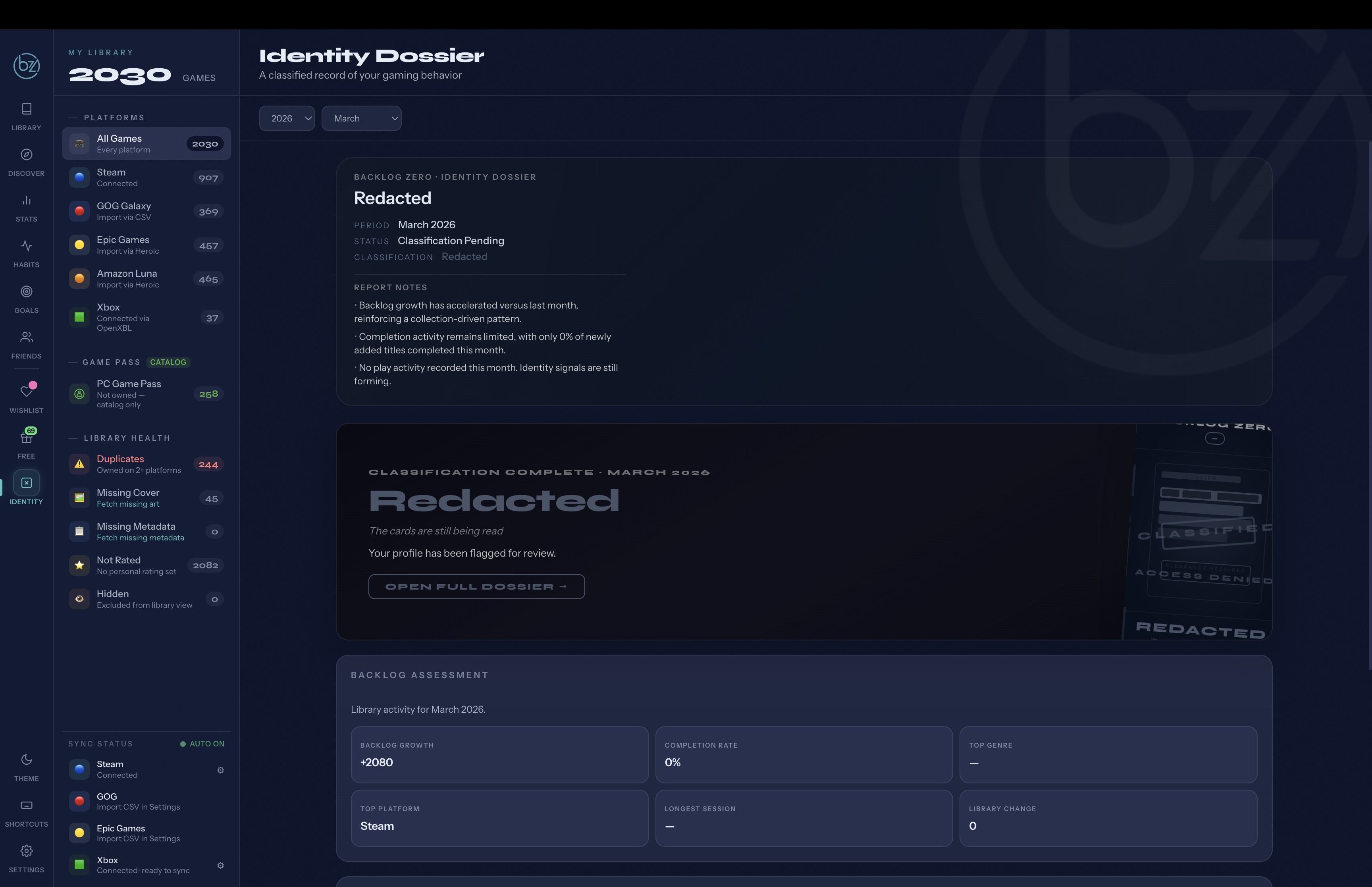
Your library is a portrait of who you are as a gamer — the genres you gravitate toward, the games you finish versus abandon, how long your sessions run, how wide your taste actually is. Most people have never seen that portrait clearly. The Identity Dossier makes it visible.
It analyzes your library and play history and produces a full gamer profile — rendered as a set of tarot-style classification cards, each one built from your real data. One of ten archetypes gets assigned based on your actual behavior. Some people find it validating. Some find it uncomfortably accurate.
Insights
Habits Dashboard
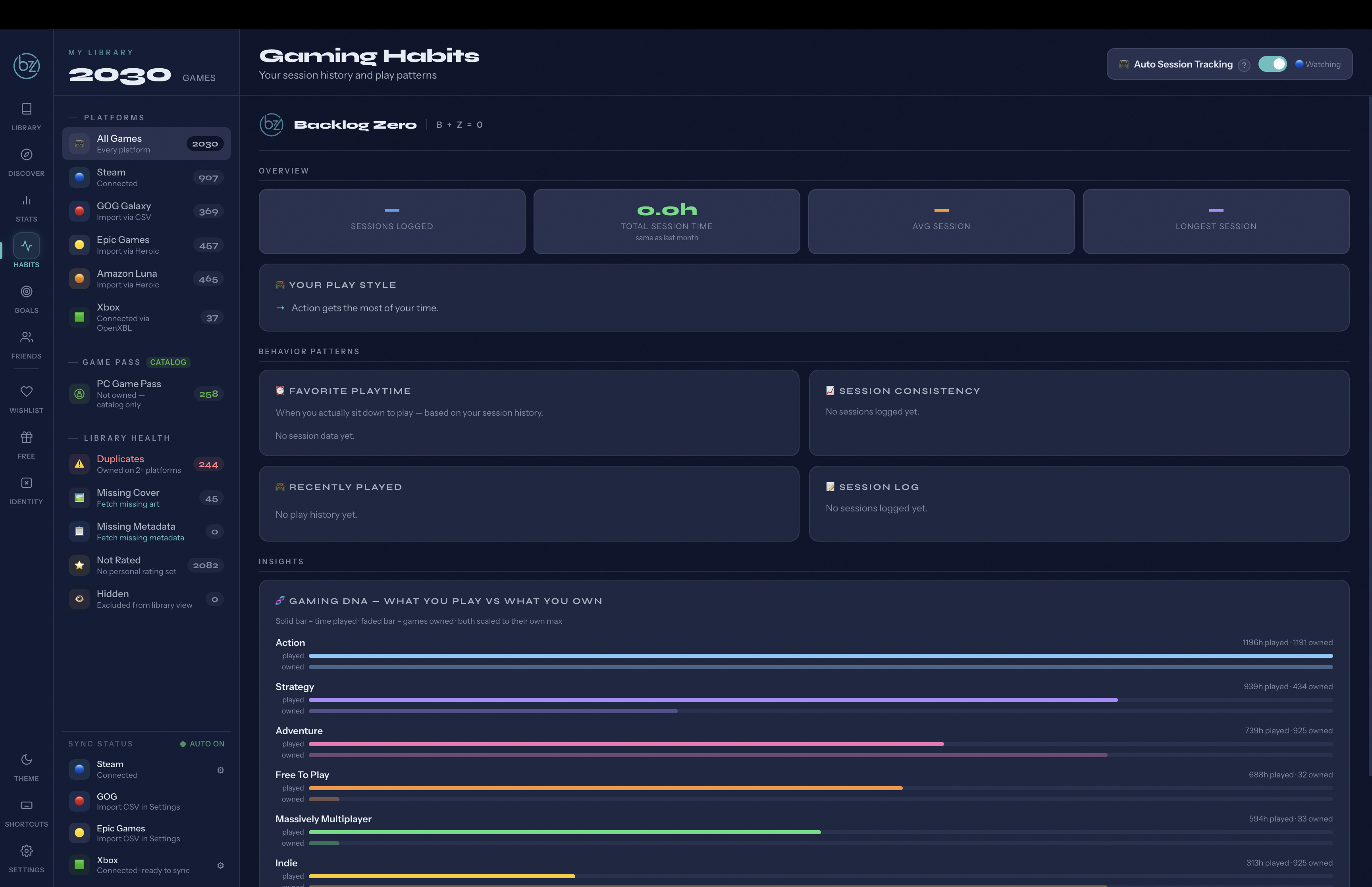
Which genres do you actually finish versus which ones you buy on sale and never touch? What time of year do you play most? How long, on average, before you abandon a game? The Habits dashboard answers these questions whether you wanted to know or not.
Your habits, visualized. No judgment — mostly.
Progress
Sessions & Goals
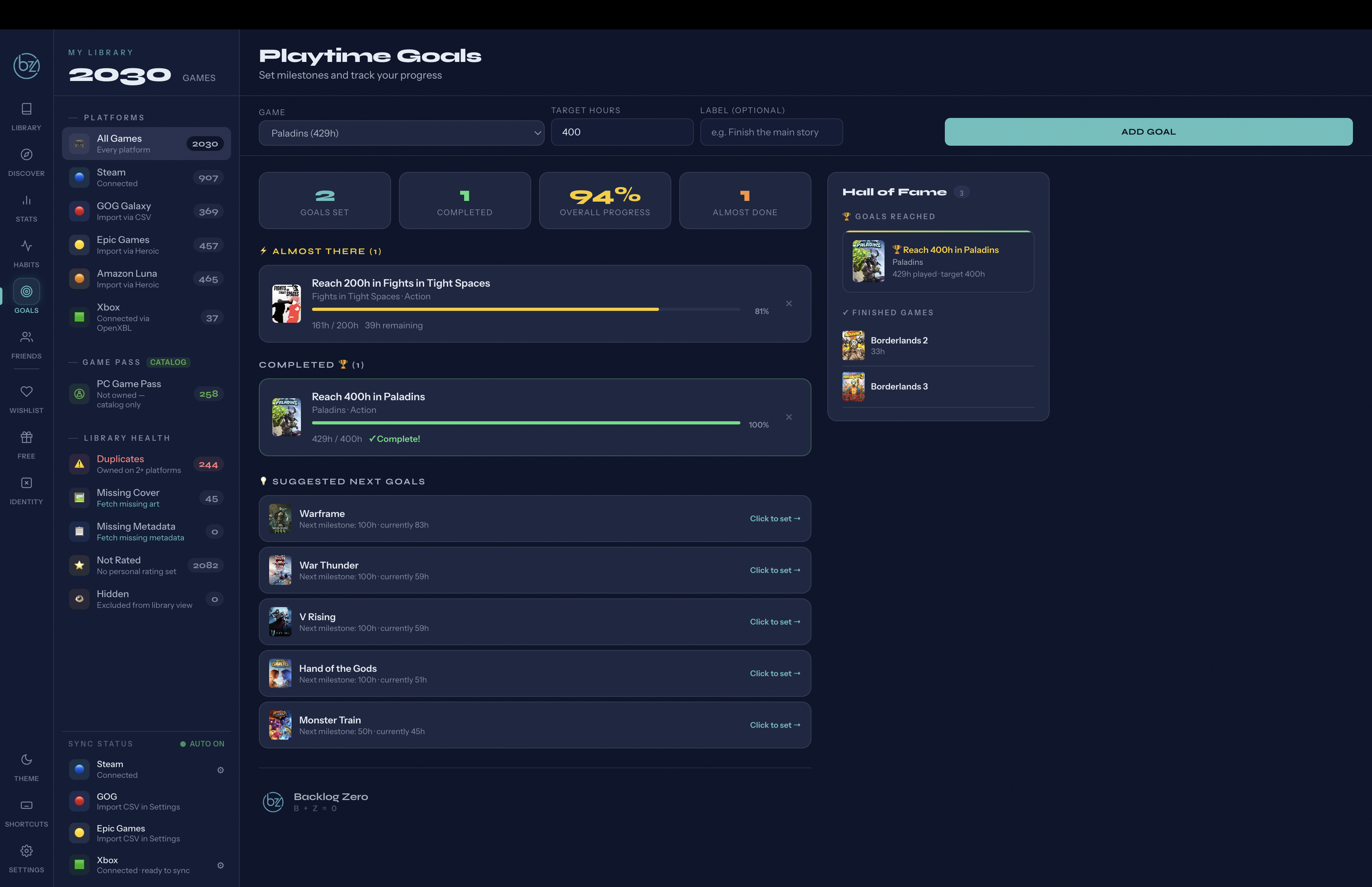
Sessions are the record. Goals are the target. Log what you play and set a number for how many backlog games you want to finish — then actually track whether you're getting there.
Most backlogs grow because there's no accountability in the other direction. Goals give you something to measure against. Sessions give you the data to measure with. Start a session timer from your phone with the Mobile Companion and it stays synced with the desktop app in real time.
Discovery
Wishlist & Free Games
The Wishlist watches prices on games you want and tells you when they drop to something worth paying. Deal signals include Below Target, Historical Low, Needs App ID, Stale Prices, and Already Owned. Version 1.3.0 adds item counts, recently added and oldest-added sorting, alert badges, recent notification history, discount-threshold alerts, and batch price checks for large wishlists.
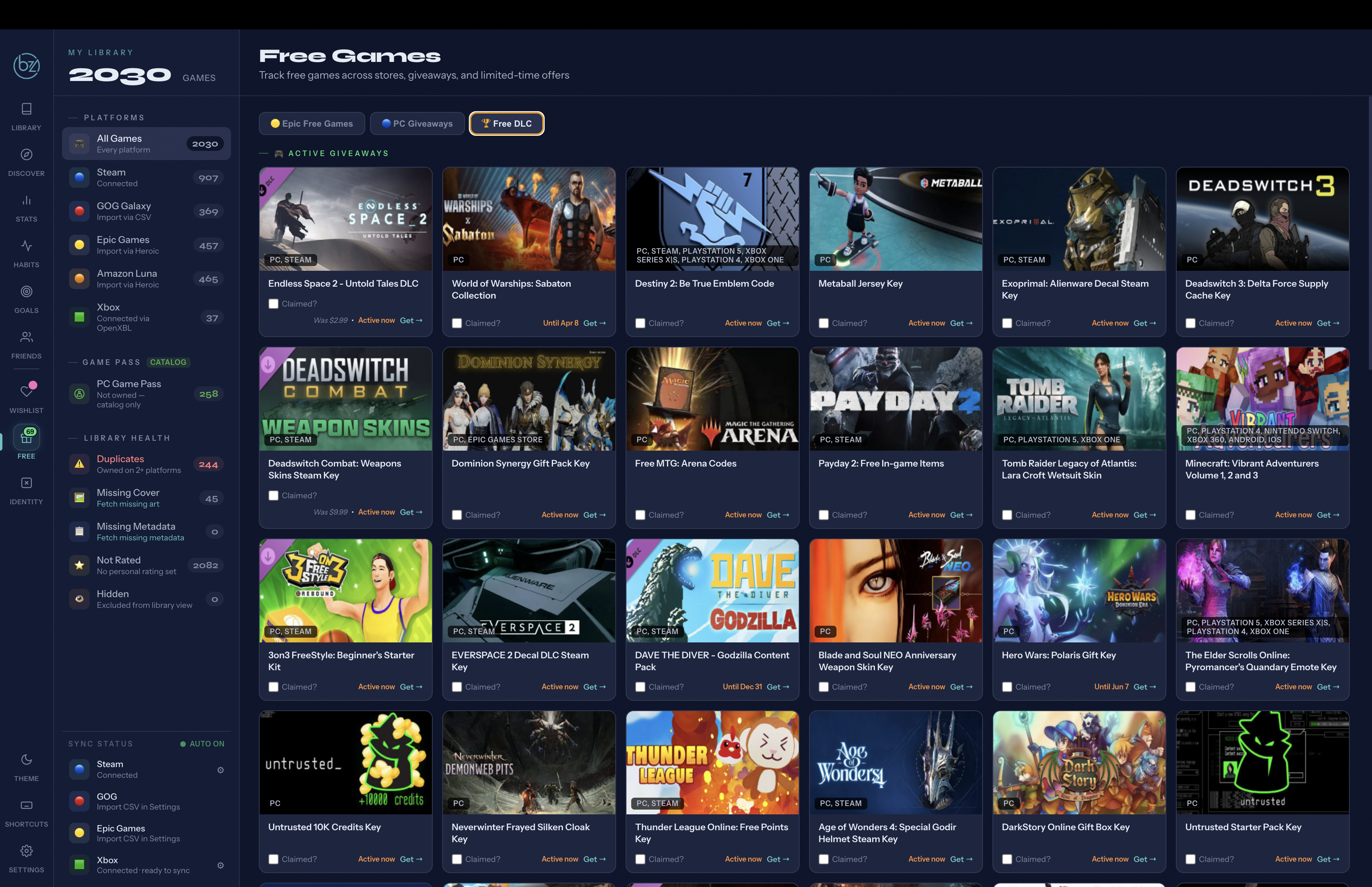
Free Games aggregates current giveaways from Epic and Prime Gaming so you never miss a free claim. Both exist for the same reason: to make sure you only add something to your backlog when it's actually worth adding.
Gameplay
Backlog Picker
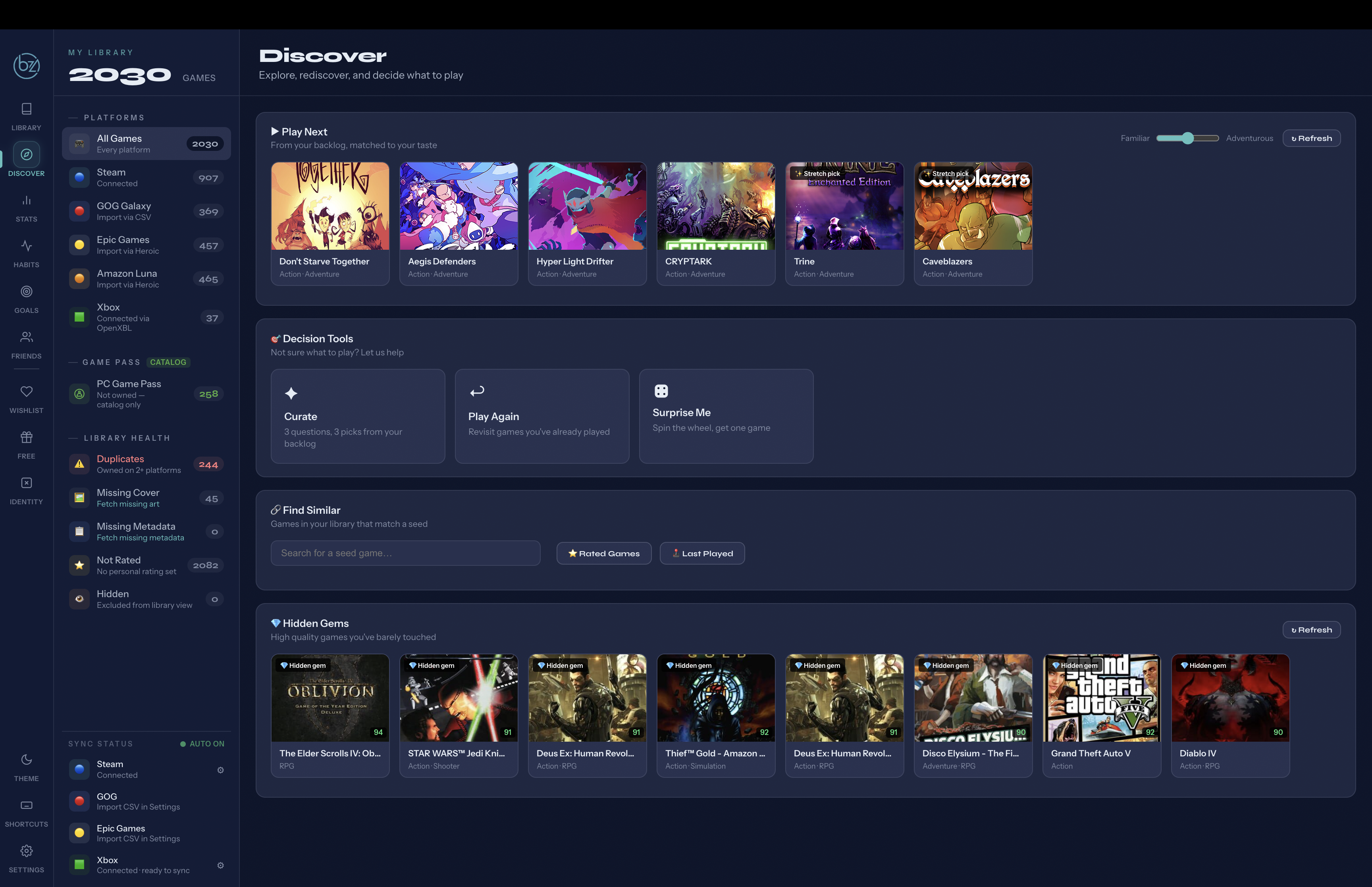
You sit down to play. You open your library. Forty minutes later you're still scrolling and haven't started anything. The Backlog Picker solves that.
It picks a game from your unplayed backlog — not your whole library, just what you haven't started yet. Controller-friendly, duplicate and franchise aware, and tuned to avoid surfacing obvious non-game noise. One click, one answer.
Previous update · v1.1.0
Mobile Companion
Backlog Zero now comes with a mobile companion — accessible from your phone or tablet while the desktop app stays in control of your library. Browse your games, log sessions, run the Backlog Picker, track goals, and check recent history without sitting at your desk.
The companion pairs over local WiFi, localhost, or a private VPN like Tailscale — so it works at home or remotely without ever touching a cloud server. Your data stays on your machine. The companion just gives you a window into it.